Raising the Standards
The Rocky Road to Achieving Good Sportsmanship🪨🏀

Let’s be real for a second — we’re in a crisis.
The stands are louder. Coaches are more entitled. And the “youth sports industrial complex” has turned a Saturday morning 5th-grade game into Game 7 of the NBA Finals. Everyone’s chasing a scholarship that doesn’t exist… and the person caught in the crossfire is usually the official. 🦓
But here’s the bigger truth: sportsmanship isn’t just “being nice.” It’s the infrastructure of the game. It’s the invisible system that allows competition to stay competitive instead of turning into chaos.
When that infrastructure crumbles, a few things happen fast:
the temperature rises
respect disappears
the game becomes exhausting to manage
and officials start walking away
And when officials quit, the game doesn’t just get “harder” — it becomes impossible to staff. That’s how the game slowly starts to die. Not overnight… but season by season.
This article isn’t here to complain about bad sportsmanship. It’s here to be solution-based and spotlight people doing real work to fix it — starting with sportsmanship pioneer Brenda Hilton and the organization she built: Officially Human. 👏
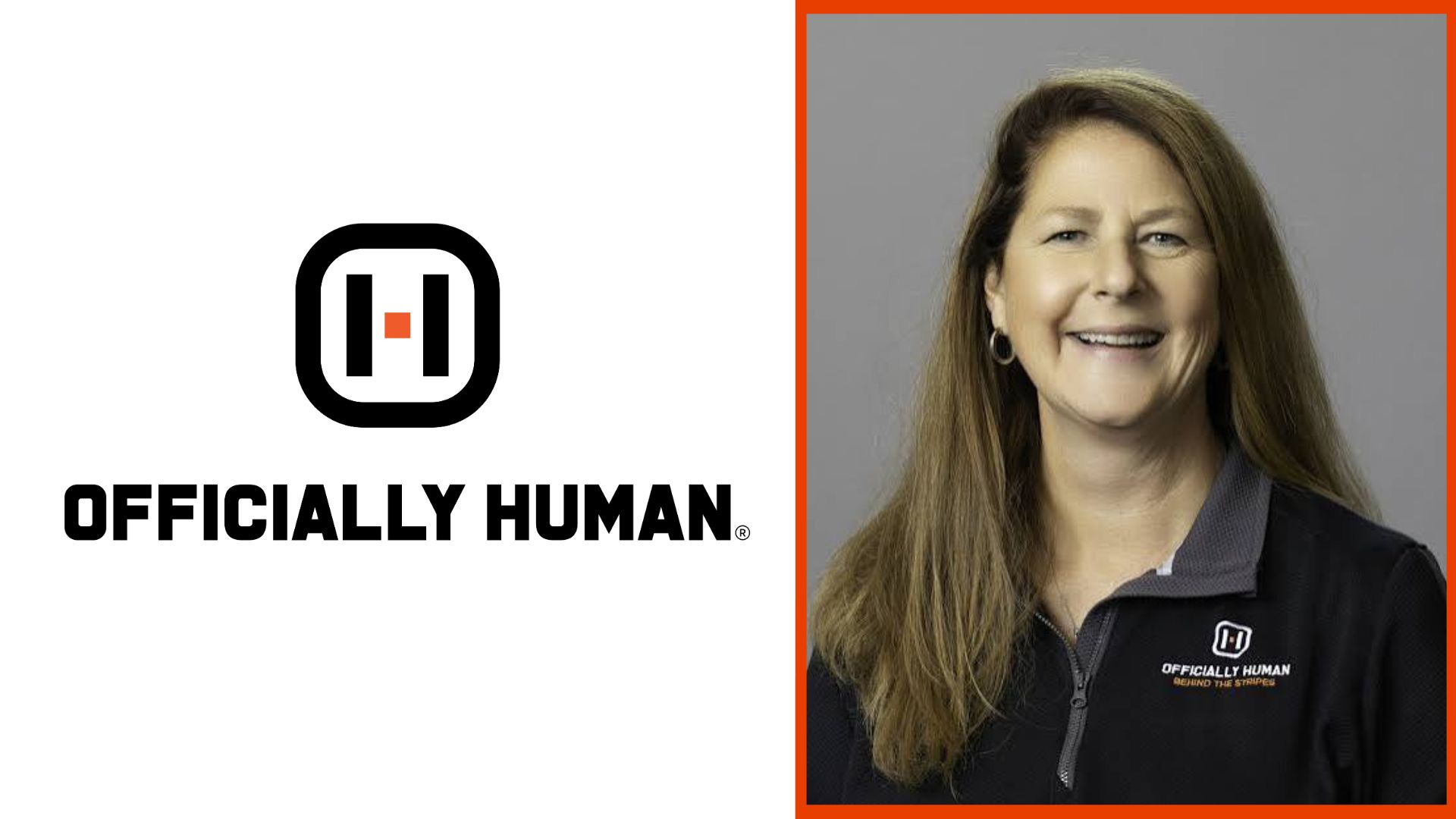
The Sportsmanship Pioneer: Brenda Hilton & Officially Human
Officially Human is an organization built to do one thing at scale:
Help the world see officials as people—and improve the way officials are treated across sports and levels.
Brenda started Officially Human in 2019 after recognizing the officiating shortage and the ongoing treatment of officials. Like many of you, she saw the problem up close and realized: “If we don’t do something intentional here, this gets worse.”
Over time, Officially Human transitioned from an LLC to a nonprofit, which created more opportunities to fundraise, expand resources, and grow the mission. And that transition matters, because the work they’re doing isn’t just “awareness.” It’s tangible, repeatable, and scalable.
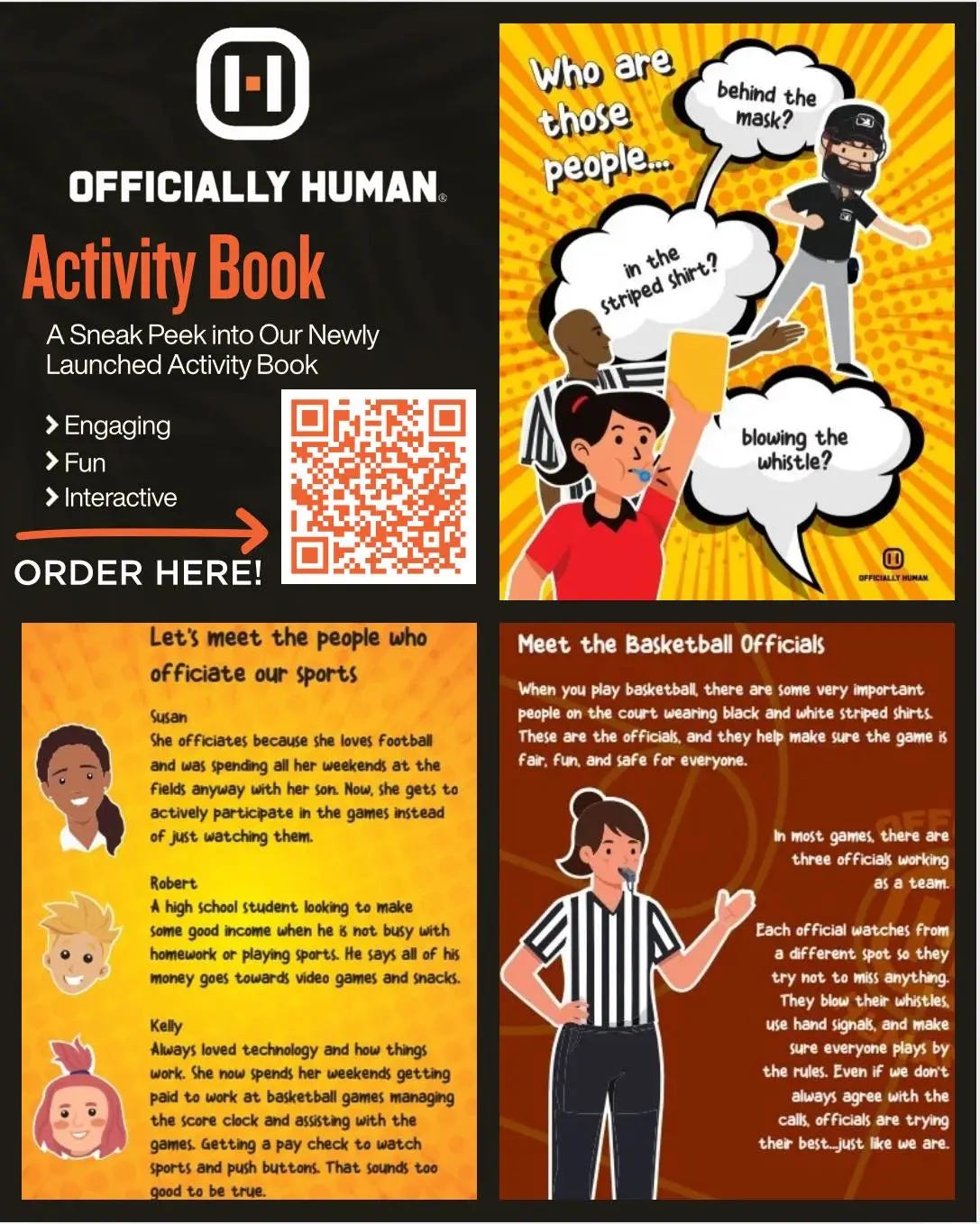
The Activity Book: A Genius Move for the Future📚
One of the coolest things Brenda shared in our conversation is their activity book—a resource designed for elementary through 8th grade students that introduces kids to:
officials in multiple sports
basic rules (kid-friendly and digestible)
positioning concepts
and most importantly… the human side of the whistle
They’ve already sent out about 4,500 copies, are preparing to order 2,000–3,000 more, and have shipped to 13 states. That’s impact.
Here’s why we believe this matters so much:
We spend a lot of time talking about sportsmanship after people have already built habits. Officially Human is attacking the problem before those habits harden.
It’s long-game thinking. 🧠
Because if a kid grows up understanding:
the official has a job
the official is human
the official is part of the sport’s ecosystem
…that kid becomes a better player, parent, coach, and fan.
And maybe even an official.
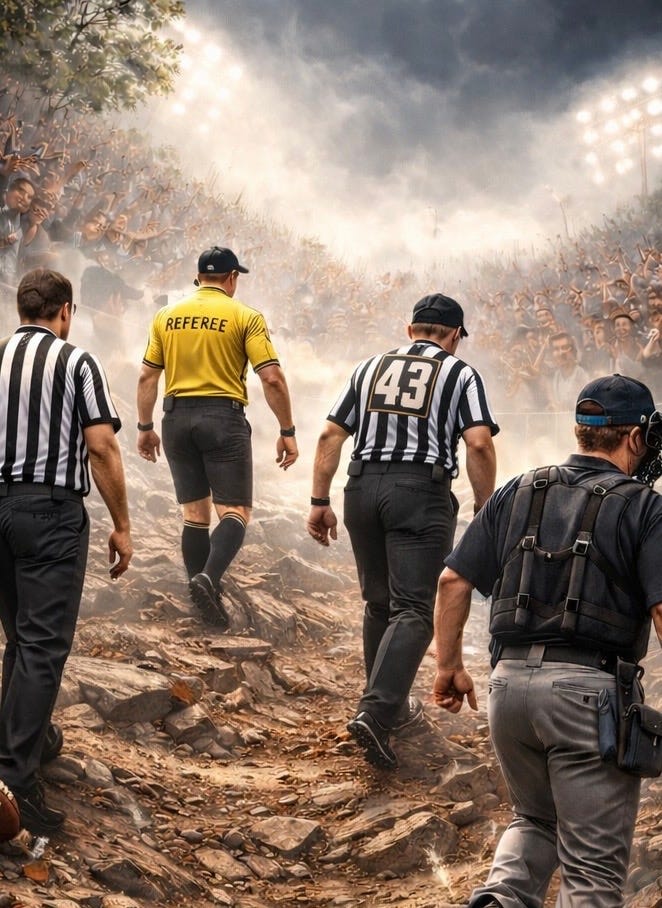
The Rocky Road: Why Sportsmanship Is So Hard Right Now 🚧
Brenda said something in our conversation that aligns with what we feel too:
Sportsmanship hasn’t magically improved. If anything, the conditions have gotten tougher.
One major reason: when money creeps into youth sports, the behavior tends to get worse. The stakes feel higher, the emotions run hotter, and people start treating a youth game like it’s an investment portfolio.
That’s the rocky road.
And here’s the key point:
When the environment becomes more intense, officials need more education, more mentorship, and more support—not less.
Recruiting Isn’t the Real Problem. Retention Is. 🔁
Everyone talks about recruiting officials.
But here’s the better question:
How many stay?
Brenda referenced the reality that many organizations already know: you can bring in new officials… but if you don’t mentor them and prepare them for pressure, the attrition rate stays brutal.
This is why Officially Human’s work matters—and why the way we manage games matters too.
Because sportsmanship isn’t just a “coach problem” or a “parent problem.”
It’s also a support problem.
Officials stay in the craft when they feel:
trained for conflict
supported by mentors
protected by standards
surrounded by community
That’s how you keep people. 🧱
Sportsmanship Improves When We Get Proactive🎯
During a recent lower-level game, my partner’s frustration in the pregame said everything. He was venting about the abuse he’s been taking from coaches all season — and at one point, he literally punched the locker. That moment spoke for a lot of officials, especially at the lower levels and in those first few years: the pressure builds, and it starts to feel like the job isn’t even fun anymore.
I told him, “I’ve got your back today. This isn’t going to be stressful. We’re going to have a smooth game and have fun.” After the coaches/captains meeting — where we emphasized sportsmanship — it took about two minutes for the first test. The coach shouted about a three-second call. I didn’t argue. I just turned and stared at him for a few seconds. He immediately waved like, “My fault,” and backed off.
A few minutes later, after a missed shot, he started shouting at my partner multiple times while running down the court. That’s when I stopped the game and issued a warning. The result? The coach apologized at halftime, stayed quiet the rest of the game, and even apologized again afterward out loud in front of his team, which was appreciated.
That’s the point: sportsmanship doesn’t improve when we hope it will. It improves when we lead early, support our partners, and set the standard before the game temperature rises.
Why Officially Human’s Approach Works 🧩
Officially Human isn’t relying on one speech, one post, or one viral moment.
They’re building a system:
PSAs
media kits conferences can use
downloadable resources
youth education tools
sportsmanship commercials
partnerships that scale the message
They’re making it easier for organizations to do the right thing.
That’s what real progress looks like: making sportsmanship easy to teach, easy to access, and easy to repeat.
What We Can Do as Officials (Without Complaining)
Here are practical, action-based takeaways you can apply immediately:
1) Address it early
Most problems get worse because we let them linger.
Early standards prevent later-game explosions
2) Protect your crew
A unified crew gets more compliance.
If one official gets targeted, the crew responds together.
3) Reward respectful questions. Don’t reward disrespectful demands.
We can answer questions when they’re asked the right way.
We don’t have to engage every comment.
4) Promote what you want more of
Brenda made a great point about positive messaging: share the good moments too.
When we only amplify the worst clips, we train people to expect the worst.
5) Stay in the long game
If we want sportsmanship to improve, we can’t only react to incidents.
We have to help build the culture—through mentorship, education, and standards.
The Bottom Line👑
Sportsmanship is a rocky road because it’s tied to emotion, politics, pressure, and culture.
But it can improve.
It improves when:
organizations educate early
communities support officials
officials lead with standards
and people like Brenda Hilton build resources that scale the mission
Officially Human is doing the work. And if you care about the future of officiating, you should know who they are.
Because this isn’t just about better games.
It’s about keeping good people in the craft… long enough to become great. 🏀🦓
If you want to support Officially Human, check out their site and resources—and if you run an organization that can place these books in kids’ hands, that’s a real way to move the needle.
Listen to the Full Episode on Spotify.
Learn more about Officially Human & Elevate Respect
❤️Thank You for reading! Wanna go deeper with Crown Refs?
Attend our Camp in Ft. Wayne
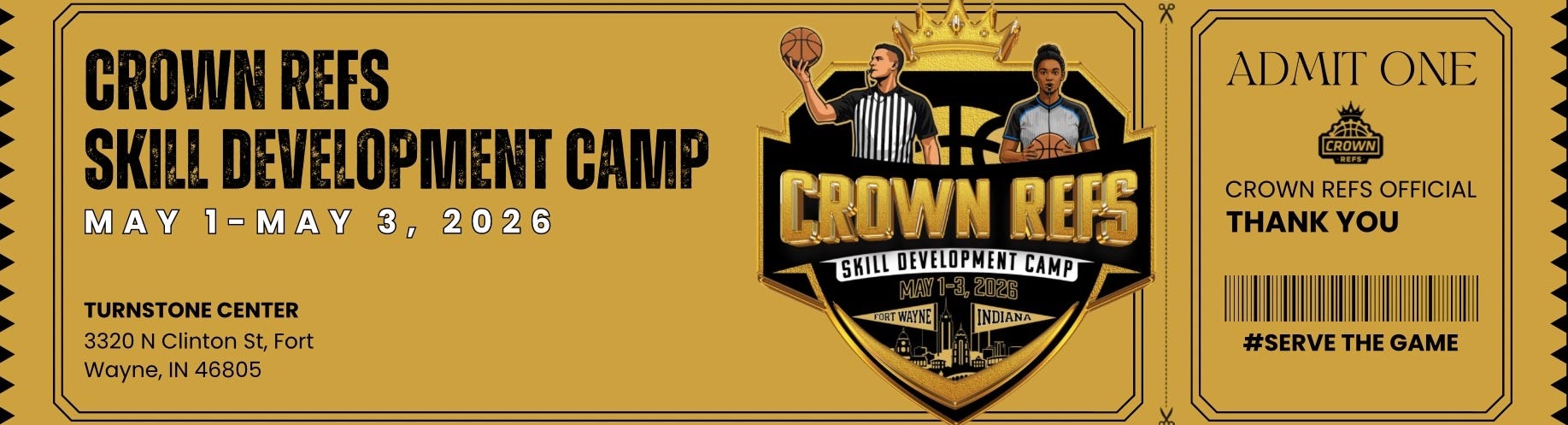
Join our Community of 500+ Officials