Eight and a Half Years, Zero Gaps: What We’ve Actually Built
What started as content became something much bigger.

A signal clip here, a rapid-response line there — most officials only ever see the surface. Here’s what’s underneath it.
Since 2018, new officiating content has gone out every single week without a break. Not because content is the goal, but because officiating is genuinely hard, and there’s an endless list of things to get better at — signals, communication, positioning, mindset. The volume isn’t padding. It’s what happens when someone treats the craft the way a serious player treats film study: there’s always another rep to break down.
The output spans video, podcast, and written content — pulled from our camps, clinics, mic’d-up games, exclusive interviews, training sessions, postgame feedback, locker room pregames, and so much more.
◆ ◆ ◆
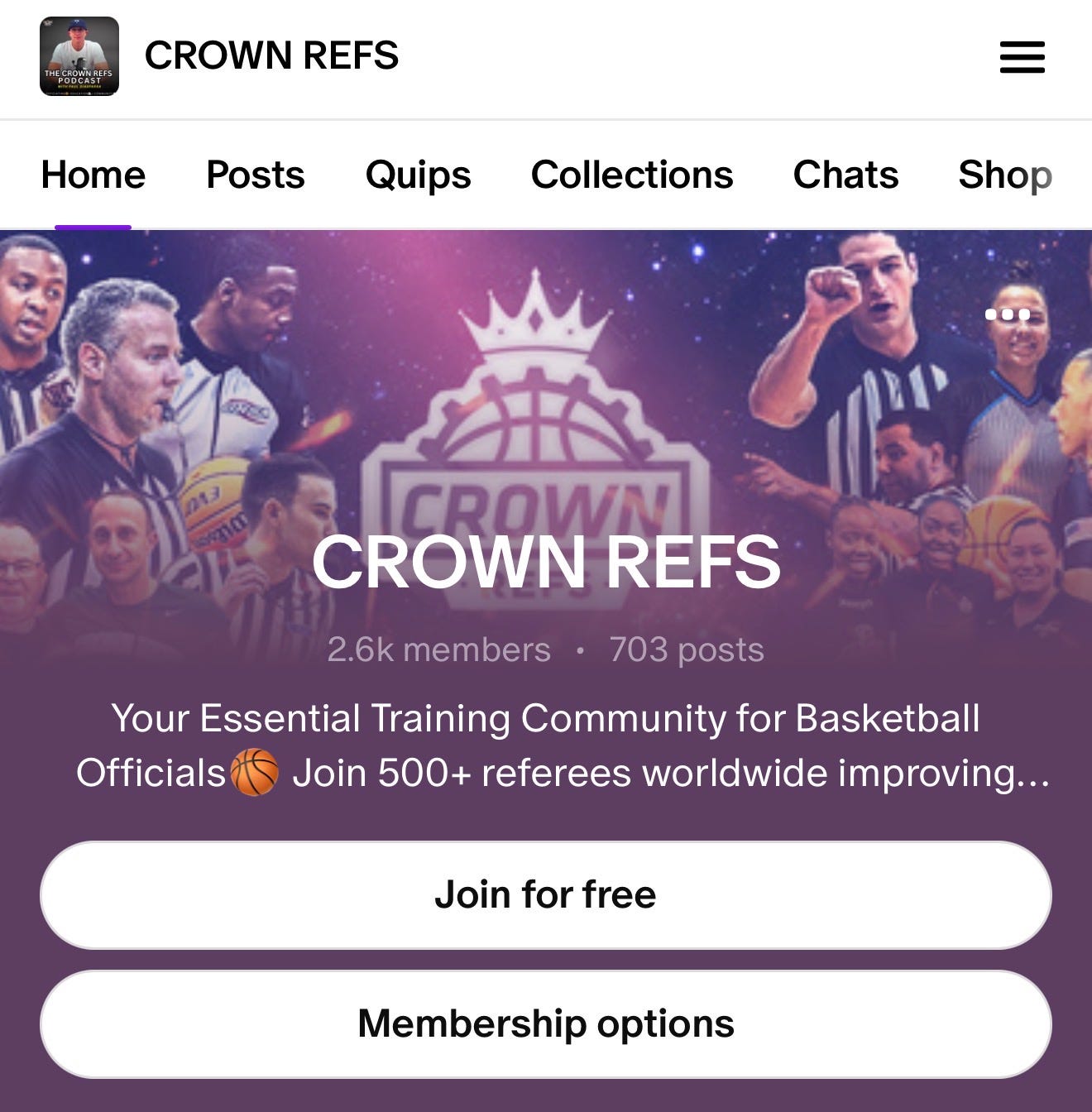
Patreon is the Netflix library — and the door where you choose your membership level.
When the content library was built out in 2021, the goal was simple: create the Hulu of officiating education. Scroll down, see a series. Scroll over, see the next episode. It’s a library built for officials who genuinely love the craft and want to consume it the way they’d consume any show they’re hooked on — because that’s exactly who ends up sticking around long-term.
But Patreon is more than the library. It’s also where you pick your membership level, and that choice is really a choice about how far you want to go with Crown Refs. It starts with a free tier and a $4/month starter tier. From there, the pro tier and above is what gets you into Discord. The plus tier unlocks the full content library on Patreon. The mentor tier is where group training sessions come in. The gold tier gets you merch for the first year. And the one-on-one tier is monthly, one-on-one coaching — working through your actual game tape and your actual growth path. Every tier up is a decision about how serious you’re getting.
Here’s the part worth being precise about: a lot of officials sign up on Patreon — sometimes on the free tier — and assume that’s the community. It isn’t. Patreon is the library and the door. The community is on the other side of that door.
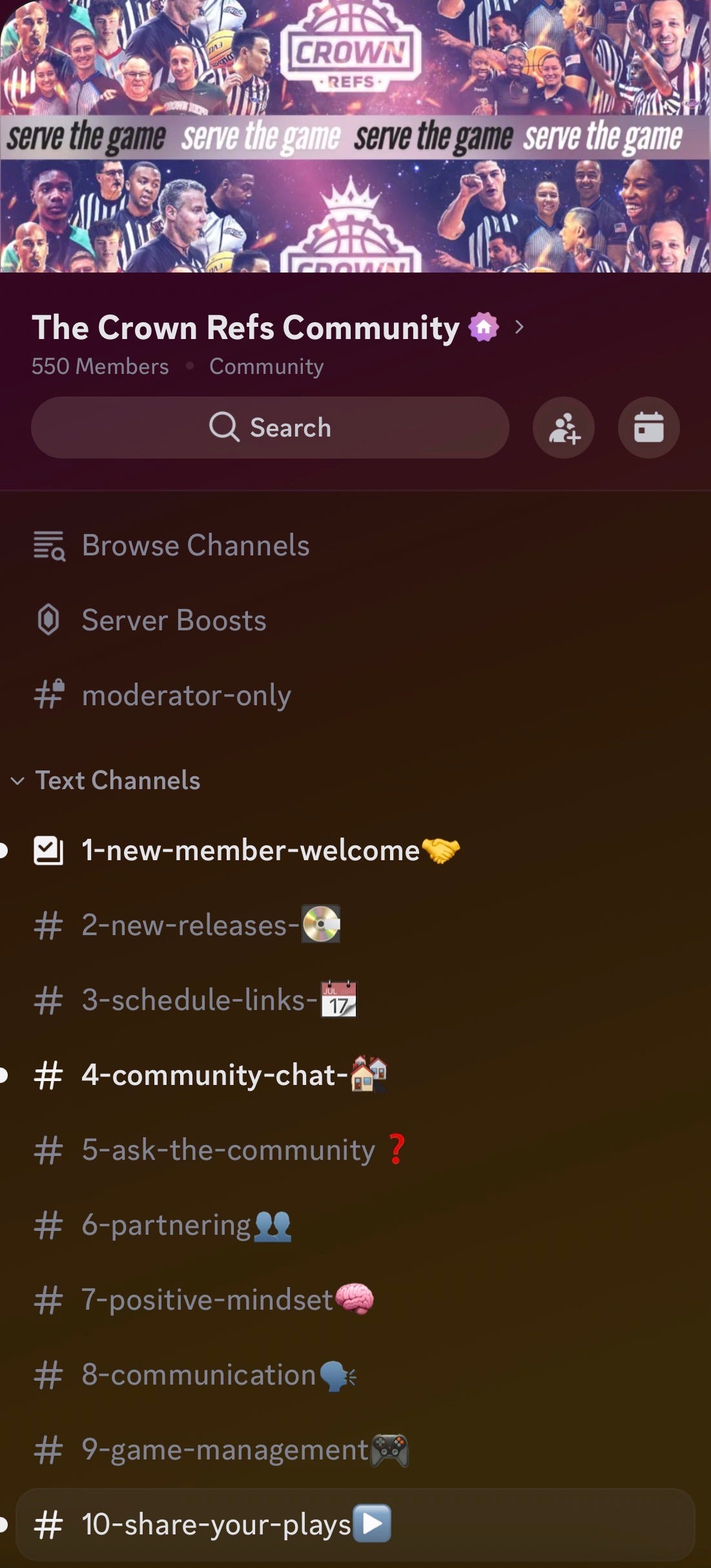
The truest community lives on Discord — that’s where 550-plus officials actually show up every day.
Once you’re on a paid tier, you get into Discord, and that’s where the actual community is — roughly 25 dedicated channels: share-your-plays, communication, signals, rules by level (NFHS, NCAA men’s, NCAA women’s), camps, watch-my-game, ask-the-community. Post a game link tonight and people show up to watch it and text you feedback after.
Some of these threads go back four years. That’s not a chat log — that’s an archive of how a community of officials has actually talked through real plays and real situations over time. Ask a question and you’re getting a response in minutes, sometimes seconds, from people who are actually trying to help you get better — not random takes from a general Facebook officiating group.
So when the word “community” gets used, this is what it actually means: the 550-plus members who are in Discord daily — sharing plays, asking questions, interacting with each other. Not the broader Patreon following. Discord is the room. Patreon is just the door in.
◆ ◆ ◆
Signal School exists because the black-and-white chart in the back of the rulebook was never enough.
A signal chart shows you the end position. It doesn’t show you how you got there, and it definitely doesn’t teach you to look confident doing it. Signal School started as one official working on mechanics one-on-one — it grew into a video series, then a podcast, then a full training session at camps and on Zoom. At this year’s camp, it turned into 35 officials on the floor at once with nine staff members rotating through, giving live feedback on every rep.
Rapid Responses exists because “just be a good communicator” was never actual training.
Coaches only really say about ten different things — they just say them a thousand different ways. Rapid Responses is a full library — 15-plus podcast episodes — built specifically around how to respond to coaches in real time: what to say when they attack your partner, when they question a call, when they’re pushing for an explanation you don’t owe them.
The core distinction that runs through all of it: know when you’re de-escalating a coach back down from a 10, and know when you’re drawing a firm line and meaning it. Those two modes sound completely different, and mixing them up is where a lot of game management goes wrong.
Having your partner’s back isn’t a nice-to-have — it’s treated as the actual job.
When a coach criticizes a partner, the standard line is direct: “I would never disrespect your assistant coaches — please have the same respect for me and my crew. Is that fair?” It works almost every time, because it reframes the disrespect instead of just absorbing it.
And that tone can shift with context — if a call genuinely got missed, there’s room to acknowledge it without abandoning the partner. But bringing a partner into the conversation is treated as a last resort, not a first move. Too many officials lead with “go talk to my partner.” The stronger habit is trying to handle the whole exchange yourself so your crewmates don’t have to.
◆ ◆ ◆
The mentoring philosophy: even a second-year official has someone to teach.
One of the closing challenges to every official on a recent call was simple — find someone one step behind you and start mentoring them. It doesn’t require seniority. It requires being one rep ahead of somebody else. And the officials who take that on tend to grow faster themselves, because teaching a concept is one of the fastest ways to actually master it.
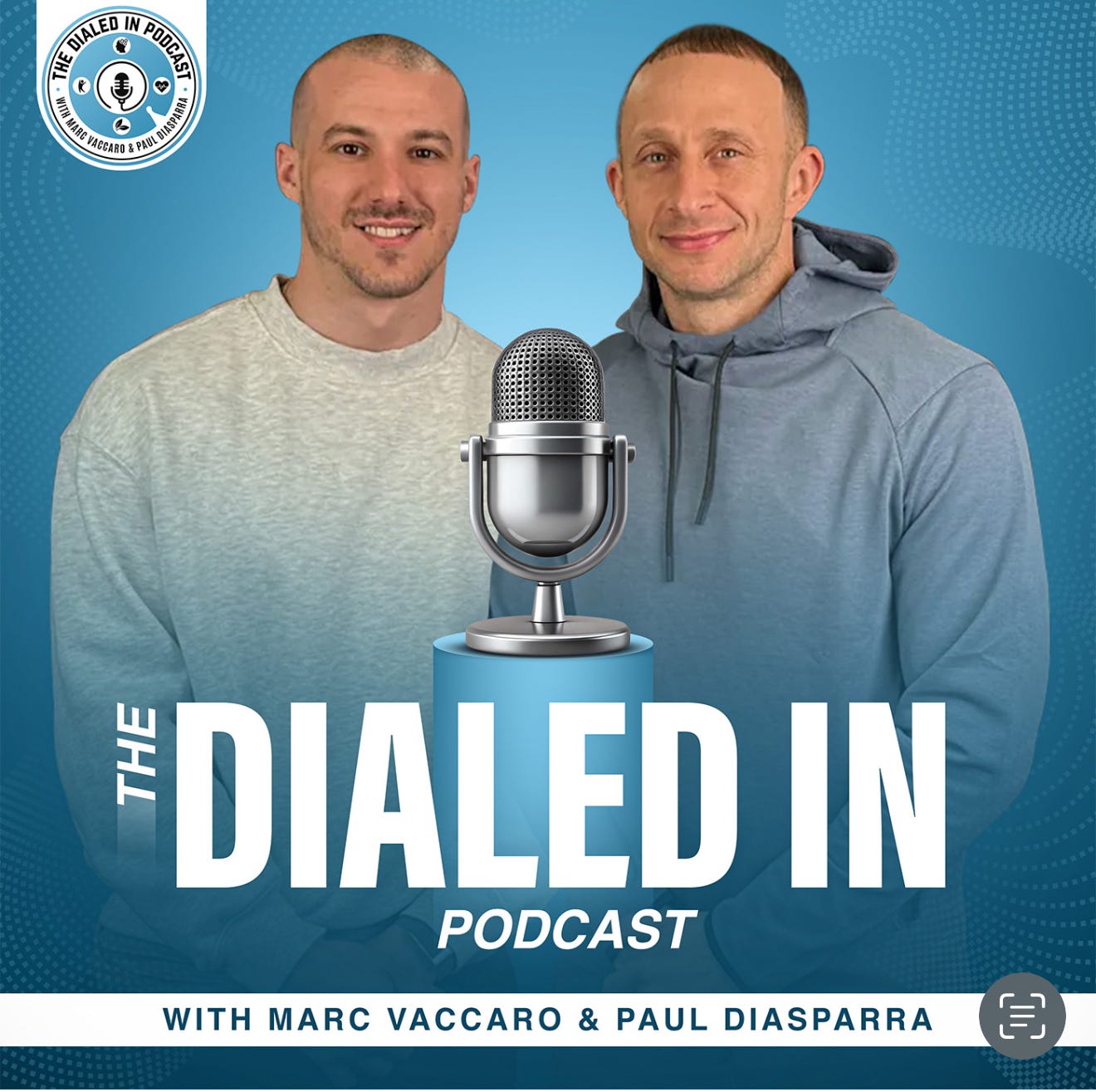
None of it works without putting health first — because the craft demands a body and a mind that can handle it.
A second podcast, Dialed In, exists specifically because physical and mental health aren’t separate from officiating performance — they’re the foundation of it. The idea that you can get biologically younger as you get chronologically older isn’t a throwaway line; it’s a real part of how the community is being pushed to think about longevity in the craft, not just competence in it.
◆ ◆ ◆
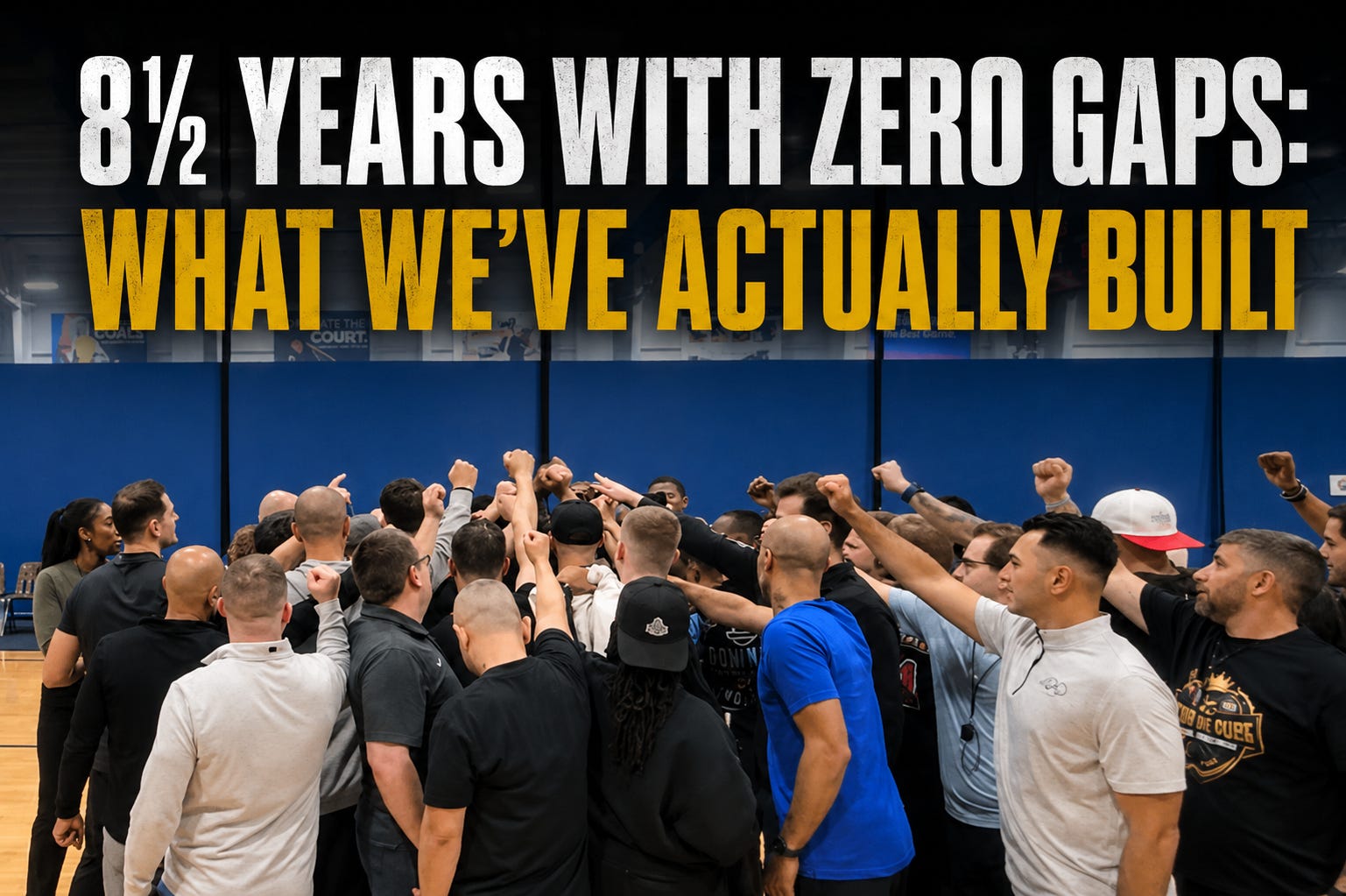
Once a year, all of it shows up in the same gym at once.
Next year’s camp runs April 30–May 2 in Fort Wayne, Indiana — three-person mechanics, high-level competition, division-one-caliber players, and a staff structure built to give real-time, high-volume feedback across multiple courts. This year’s theme wasn’t just skill development — it was character, community, and education, in that order of emphasis.
The message to every official walking in was blunt: you think you’re here for referee skill development. You are. But you’re also here to walk out Sunday a happier, healthier person than you walked in Monday morning. That’s the actual design intent behind the weekend.
Community members get access at a discounted rate versus outside registration — a deliberate choice to take care of the people who support the ecosystem year-round, not just show up once a year.
The alumni numbers are the proof of what the year-round work actually produces.
Over 40 officials from the community have been hired into Division I. More than five are working in the G-League. And the goal was never to only chase the officials aiming for the highest levels — the same support exists for someone who just wants to be an excellent varsity official. The range of experience across the community, and the results across every level, is the evidence that the system works whether the goal is one level up or five.
The takeaway: this was never a once-a-year event. It’s a system that happens to peak once a year.
Signal School, Rapid Responses, Discord, Patreon, the rules reviews, the one-on-one coaching — all of it runs twelve months a year. The camp isn’t separate from that. It’s the one weekend where the entire system gets to stand in the same gym, in person, all at once — and where the relationships that get built online for months finally get to shake hands.
If you’re an official who genuinely loves the craft and wants to move up alongside people just as obsessed with it as you are — this is what a full year of that actually looks like.
Join our community
Patreon.com/crownrefs/memberships