

Common Grounds for Officials and Coaches
Finding the shared purpose that makes the game better for everyone

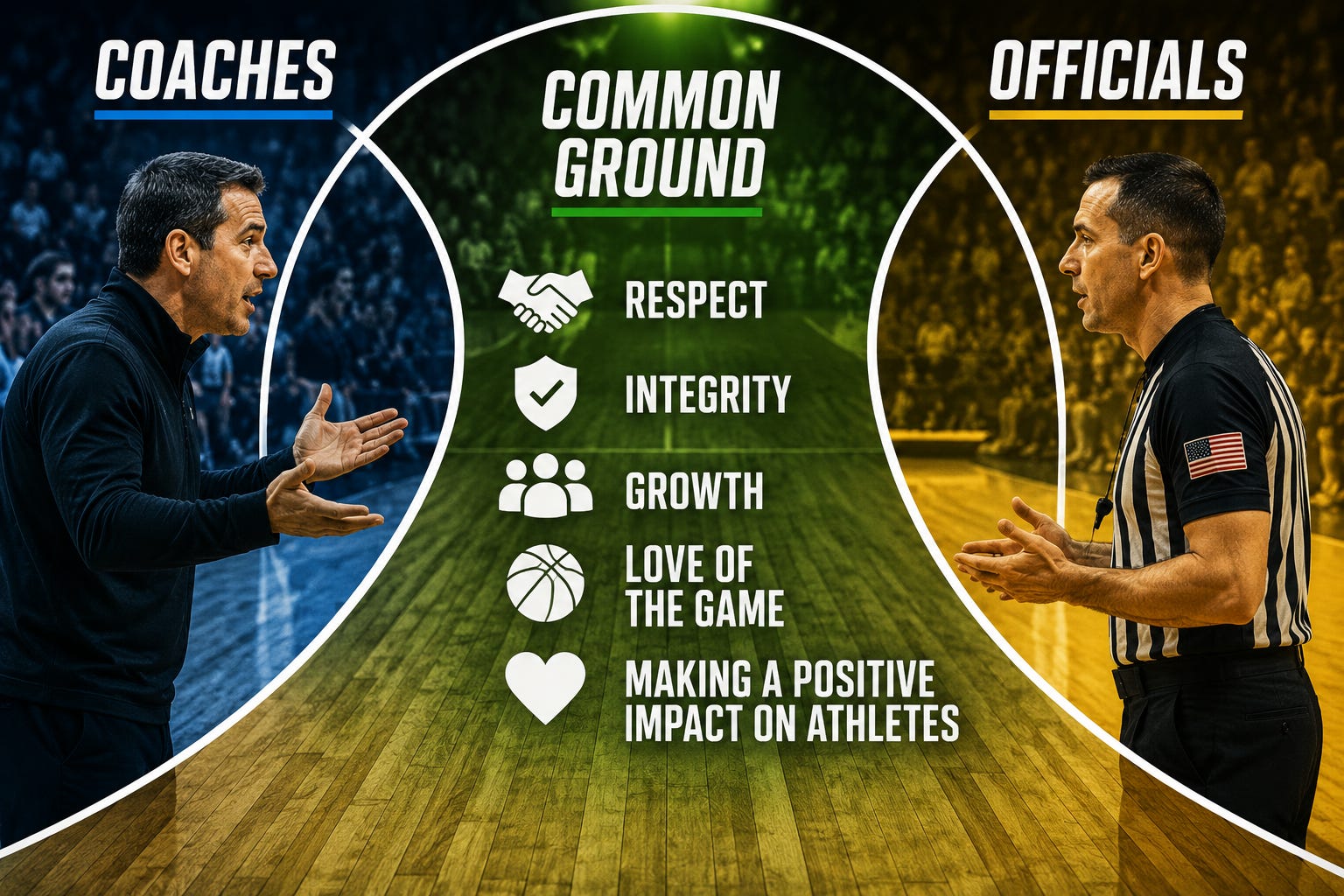
What causes the disconnect between coaches and officials? Do they both have the same interpretation of the game? Some of the hard questions coaches may have are; What actually makes a screen illegal? Why does the same contact get whistled in the second half when it sailed through the first?
Let’s bridge the gap and dive into how understanding the way officials see the game makes the relationship between refs and coaches better.
Navigating Coach-Referee Dialogue and Game Strategy
We all know the preparation that goes into becoming an official. You take the time to learn the rules, put in the work to get certified, and then you’re off on your officiating journey. But something they might not teach in your course is one of the hardest parts of being a ref; how to respond to coaches. Especially those who can put a lot of pressure on you, berate you with constant remarks, and repeatedly challenge decisions. It’s like, ‘You’ve made it this far! Good luck with all these crazy coaches.’
Luckily, we have our Rapid Response series for those in-game moments when we run into these types of coaches; but what if we could get ahead of some heated moments before the tip-off? A great way to avoid this is talking to coaches before the start of the game. Use this time to set the tone. Emphasizing sportsmanship and management of the players is an easy way to establish respect. Players, coaches, and referees all have their roles in a game and we all want to do our best to fulfill it. The more that everyone on the floor understands this, the smoother the game will be. Think about the rapport that you build at the start of the game and see how a coach addresses you differently; more respectfully. Productive conversations can be had.
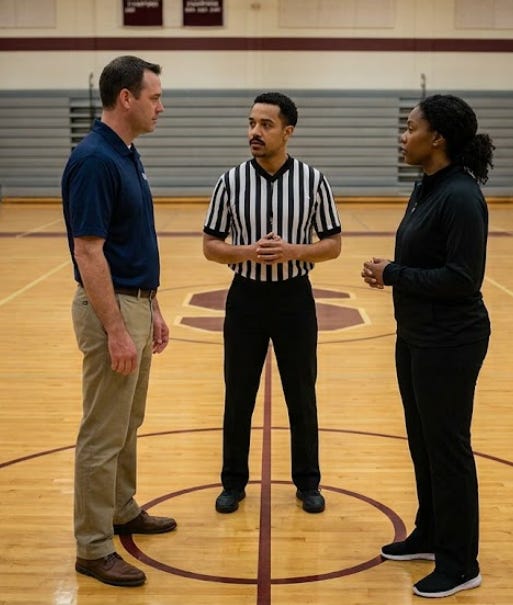
While getting everyone on the same page is an important practice; it’s just the first step to solid communication throughout the game. There can always be a 50/50 call a head coach won’t like or a no call they swore was a foul. And more times than not, if it’s argued aggressively, officials are not going to want to talk it out. Sometimes, there might not even be much time for a full discussion on play calling. At this point, we have to recognize how to manage these moments and prioritize open communication where we can.
The “No Call” Dilemma: Patience and Call Consistency
Let’s say, a coach comes up to you during a dead ball about a no call they felt was an illegal screen.
“Ref, #5’s feet were wide on that last play, how is that not an illegal screen?”
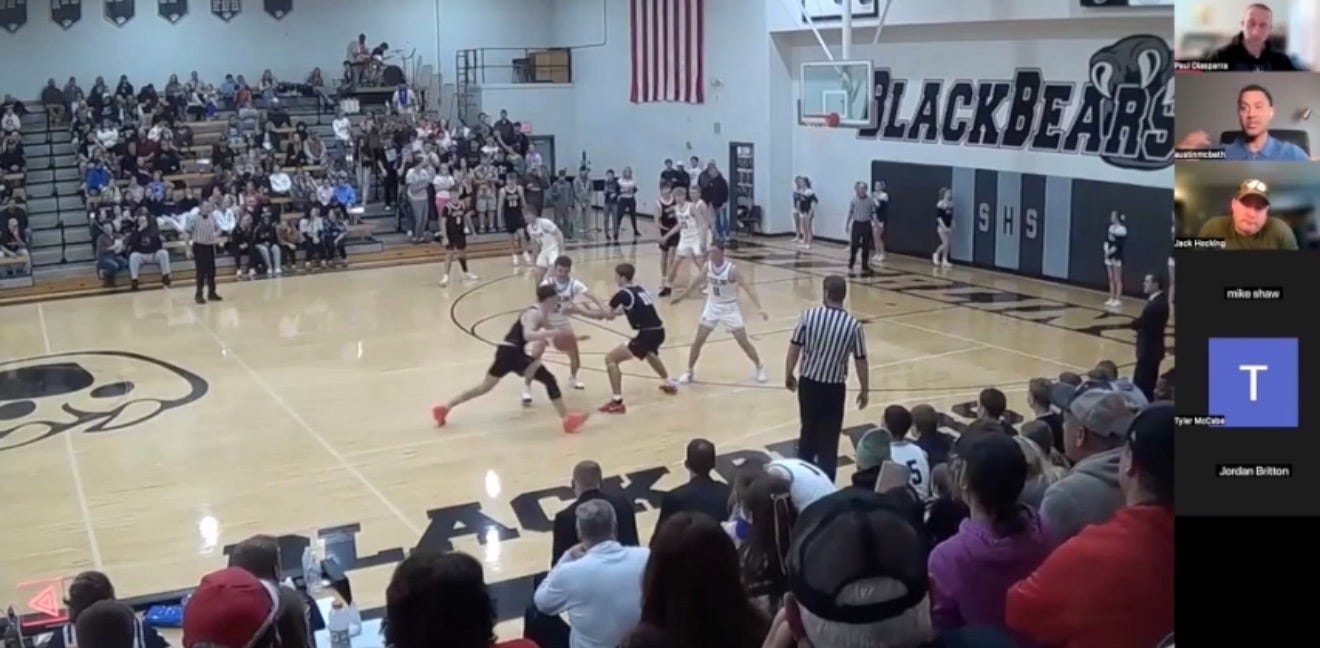
Your training and judgment allows you to inform why you chose not to blow your whistle. You were patient and saw that while the player was slightly outside of their vertical plane there was no illegal contact and the defender was not put at a disadvantage. And so you decide the screener’s position was marginal and the call was not obvious. On the other hand, you see that the coach makes a fair point and you will keep an eye out for it the next play. No matter where you land, either can be an opportunity to provide context. Taking this a step further, what if you feel that this could rise to become illegal later in the game. This is an example where you could communicate proactively and give the opposing coach a heads up; “Hey, just want to let you know the screens your player is setting is too wide. The next time I’m going to call that an illegal screen.” Remember, proactive communication from refs can prevent problems before they escalate.
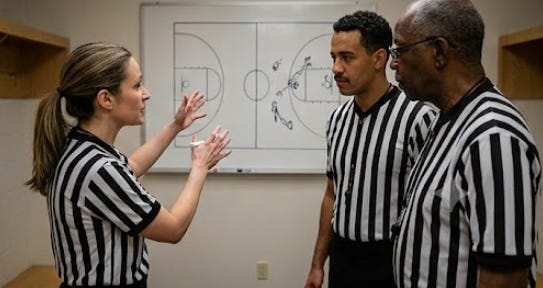
As important as our discussions with coaches are, we also have to convene with our partners. Specifically, during halftime. Depending on how that dialogue goes, it’s possible the game will be called a bit differently in the second half. If your crew decides this game is getting sloppy and needs some tightening up, expect these adjustments to be questioned by coaches. The best way to handle those conversations is to speak on specific plays and not the general changes made.
“Ref, there were four fouls called in the first half. Why are you all calling so many now?”
This is a prime example of something you’d hear during a game. You don’t need to go over to the coach and explain the conversation you had over halftime with your partners. But you can ask for a specific play they would like for you to address. No play will be the exact same during a game. Some will be similar, but not the exact same. This is why every play has to be evaluated in isolation. Speaking on one play shows your credibility by allowing you to properly inform a coach of what you saw and how you came to the conclusion of your call rather than generalizing the entire game.
Whether or not your perspective is understood, communication will help to establish some common ground of what is considered to be legal and what’s not. When being approached in a respectful manner, there’s a chance to foster the regard of everyone on the floor, and put us in the best position possible to manage each game.
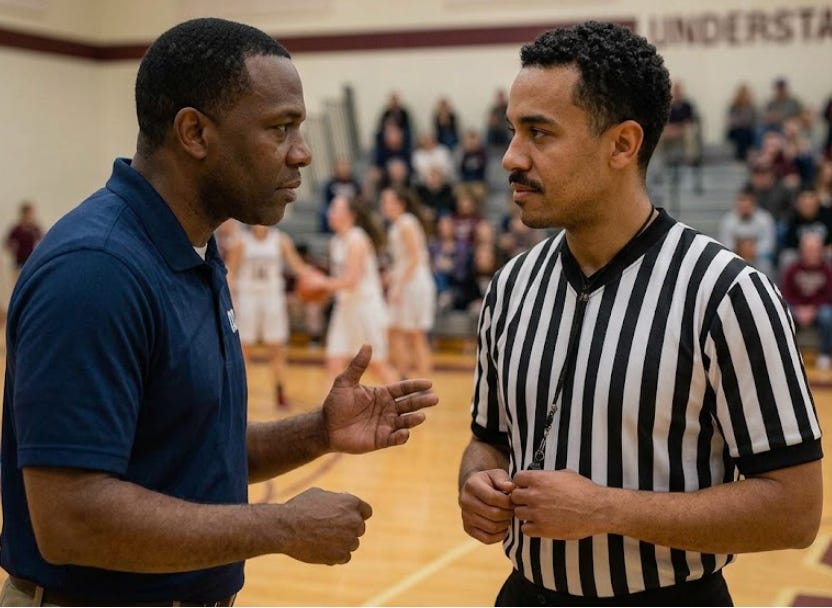
Foster Mutual Understanding Between Coaches & Officials
Despite preconceived notions, officials and coaches are not enemies. Going in with this kind of mindset can actually hurt judgment. We’re all important pieces of the game and just want to do our best. We are all also human. We want to feel heard and respected. Our best game might be a coach’s worst nightmare. A coach can think they’re coaching the best game of their lifetime because of how many times they yelled at a referee. This is why it’s important to establish respectful boundaries and participate in meaningful communication. Securing that common ground before the game is crucial. This is game management even before tip-off and can make your job easier for the next 40+ minutes. Making the choice not to ignore a coach’s questions also goes a long way. Asking for specific plays and sharing the knowledge we have displays credibility and confidence in our decisions. Emotions may run high, and we can’t guarantee there won’t be miscommunication but what we can do is stay on top of what we can control. Use this as a guide to allow yourself to set the tone and practice proactive communication. And when things get elevated you can always point to the Rapid Responses series.